I Publish a Talking Train and a Medieval War Epic on the Same Site. Here's Why That's Not Strange.
What running a free ebook platform across a dozen genres taught me about what actually keeps a reader turning the page
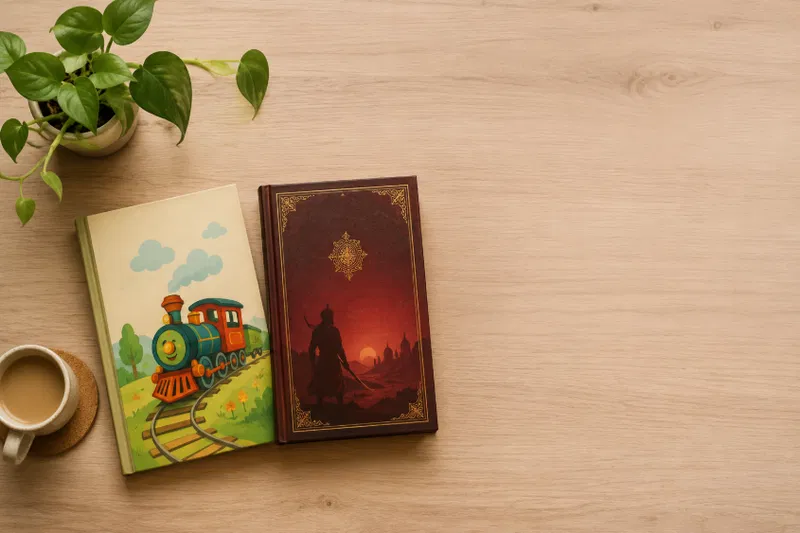

Someone emailed me last month, a little confused. They'd read a children's picture book on my site about a talking train that teaches kids basic addition through a rainbow, then clicked through my author page and found a 400-page war epic about a warrior crossing a desert toward Jerusalem. Same author name on both covers. They asked, politely, if that was a typo, or if two different people were somehow sharing one byline by accident.
It wasn't. I write both. I've also written a cyberthriller about six teenage hackers, a quiet story about a sparrow nesting on a Mumbai balcony, and a book where a jeep survives an avalanche. None of that felt like a strange career choice while I was doing it. It only looks strange laid out side by side on one shelf.
The question I get asked more than any other
People assume genre is the thing that decides whether a reader finishes a book. Pick the right genre for your audience, the thinking goes, and the rest follows.
I stopped believing that somewhere around my third book. What decides whether someone finishes is whether the next page keeps a promise the first page made.
A rainbow that hides a number pattern makes a promise to a seven-year-old: keep going and this will make sense in a way that feels like a discovery, not a lesson. A desert warrior facing a locked gate at Jerusalem makes a completely different promise to an adult reader: keep going and the cost of getting there will feel earned. Different ages, different stakes, same underlying deal between writer and reader. Break that deal once and the book closes, whatever genre it's filed under.
What running a reading platform taught me that writing alone never did
I didn't fully understand this until I started ebookhunt.online and could actually watch, page by page, where readers stopped.
Writing a book, you find out what worked months later, if you find out at all. Running a site where people read your books in a browser, you find out in days. A kids' train adventure called The Journey of the Hope Express holds attention almost perfectly through its color-and-number riddle in the first third, then again through a scene where the children rebuild a washed-out bridge with their own hands instead of having the problem solved for them. Readers stay for both, for the same reason: something concrete is happening, not a lesson being announced.
The political thriller Team Cipher loses almost nobody in its first chapter, because a chapter about six hackers realizing they're already being watched doesn't ask for patience the way a slower opening would. The historical epic Crescent and Sword asks for more patience up front, and readers give it, but only because the desert setting and the stakes are established fast enough that the patience feels like it's buying something.
The reading-time tracker on the site ended up telling me something I hadn't expected either. Readers of the sparrow story, a quiet book about a bird nesting on a Mumbai balcony, read in short, repeated sessions, a few minutes at a time, over several days. Readers of the cyberthriller mostly finish in one sitting.
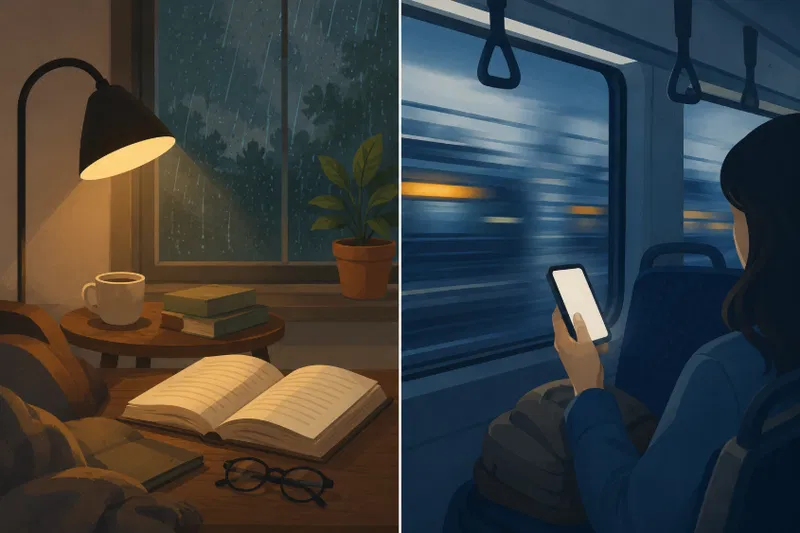
I didn't design the books to be read that way. The pace of each story just turned out to invite it, and once I could see the pattern in the data, I stopped fighting it in the writing and started designing for it instead: shorter chapter breaks for the slow, atmospheric books, and a reading experience for the faster ones that doesn't interrupt someone mid-momentum with a heavy loading screen.
Each of those examples comes down to the same thing: whether each page is doing a job a reader can feel.
Why I kept building instead of picking a lane
A lot of advice for independent authors says to niche down. Write one genre, build one audience, repeat the formula that worked. I understand why that advice exists, and I ignored it anyway. The question I actually cared about was what makes a free book worth someone's fifteen minutes instead of their phone.
That question turned out to have a different answer for a six-year-old, a commuter reading during a train delay, and someone who wants a slow evening with an atmospheric novel and some rain sounds in the background. Building one platform that could hold a children's book, a thriller, and a historical epic side by side, and let each one be read the way it actually wants to be read (a talking train doesn't need dark mode and ambient piano, a war epic often does), turned out to matter more than picking a single genre and getting good at only that.
The part that surprised me
I expected the platform to make me a better publisher. I didn't expect it to make me a more honest writer.
Once you can watch, in real numbers, exactly where a chapter loses people, you stop being able to lie to yourself about a slow opening or a scene that exists because you liked writing it rather than because the reader needed it. Every genre I write in got tighter because of that, not looser. The children's book got shorter scenes with more concrete stakes. The thriller got its first hook moved earlier. The historical epic kept its slower opening, because that's the one place readers actually wanted the patience, once the stakes were clear.
If you write across more than one genre, or you're wondering whether that even makes sense as a career, I don't think the genre is the thing to worry about. I think the promise on page one, and whether page forty keeps it, is the only question that has ever mattered, and it's the same question whether the book has a talking train on the cover or a war on it.
You can read all of the books mentioned above, free, on ebookhunt.online, including The Journey of the Hope Express, Team Cipher, and Crescent and Sword, each formatted for its own genre rather than a single one-size template.
Comments
No comments yet. Be the first to comment!