The Book I Almost Never Finished on My Phone Suggested
What building a reading site taught me about why people actually give up on ebooks
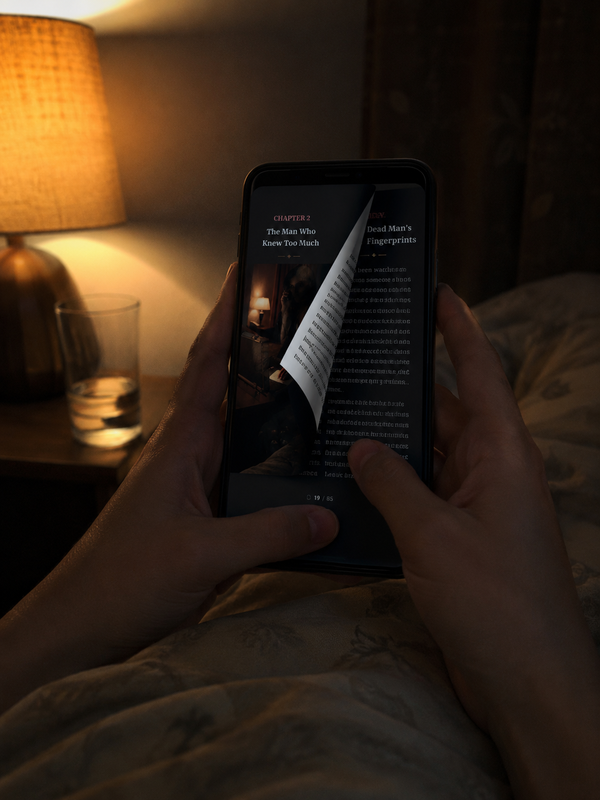

I downloaded my first ebook in 2016. A thriller, 340 pages, saved as a PDF onto a phone with 8 GB of storage and no space to spare. I remember deleting two apps just to make room for it.
I never finished it. Not because the story was bad. The file kept losing my place every time the phone restarted, the text was too small to read without pinching and zooming on every page, and by page 60 I'd rather scroll through anything else than fight the format again.
For years I thought that was just how ebooks were. A copy you own, sitting somewhere on your device, waiting for a version of you with more patience than the one currently holding the phone.
It took building a reading platform of my own to understand what was actually wrong. It was never the story. It was the fifteen small frictions standing between me and page 61.
What actually stops people from reading a digital book
I write historical fiction now, and I read constantly for research. Somewhere in that process I started paying attention to the exact moment a reader closes a book and doesn't come back.
It's rarely the writing. A reader who picks up a book has already decided they want the story. What kills the habit is smaller than that: a page that won't turn without a laggy zoom-and-pinch, a font stuck at one size, a screen so bright at 11 p.m. that reading feels like an argument with your own eyes.
Physical books solved this by accident. A page turns with your thumb in under a second. The weight of the pages left tells you how far you've come. None of that needed explaining, because your hands already knew how to do it.
Digital reading threw all of that away and replaced it with a scroll bar.
Building the thing I actually wanted to use
When I started ebookhunt.online, the goal wasn't to build another library. Free ebook catalogs already exist by the dozen. What was missing was a version of reading online that didn't feel like reading a document.
So the pages turn. A real 3D animation, with the sound a paper page makes, because that half-second of feedback is doing more work than it looks like. Dark mode exists because reading at midnight on a bright white background is its own small punishment. Text zoom is adjustable line by line instead of jumping between three fixed sizes that never quite fit. There's ambient background sound, rain or ocean or a single piano, because some books ask for a room that isn't silent and isn't your neighbor's television either.
None of this required an account to unlock. The book I wanted to read at 2 a.m. never once asked me to sign up first.
The book I finally finished
I went back and read that 2016 thriller again, this time on the platform I ended up building. Same story. Same 340 pages.
I finished it in four sittings. Nothing about the writing had changed. What changed was that the page actually turned when I expected it to, the text held its size without a fight, and the room stayed exactly as quiet or as loud as I wanted it.
That gap, between a story worth reading and a format that lets you actually read it, is smaller than most people think and bigger than most reading apps admit. If you've ever abandoned a good book halfway through for no reason you could quite name, there's a real chance the format was the reason, not the story.
I still don't know if that thriller was ever meant to be a favorite of mine. But it's the first ebook I ever finished start to finish, and it took building an entire reading platform to figure out why the first attempt never stood a chance.
Comments
No comments yet. Be the first to comment!